What is Courage? Through the enclosed stories Mother Mirra, the God-realized Yogi, highlights the real meaning of courage. True courage she tells us, is the ability to walk the straight path, to brave the storm, darkness and suffering and to persevere forward, in spite of everything, towards the light. The enclosed narration which illustrates this meaning of courage has been excerpted from her book: Words of Long Ago (Volume 2 of Mother’s Works).
What is Courage? The Man Who Walked on Water to Reach Lord Buddha
Let me tell you about the calm courage that accomplishes useful and noble things without show or flourish. A deep river ran past an Indian village of five hundred houses. The people of this village had not yet heard the teachings of Lord Siddhartha (Buddha), and the Blessed One decided to go to them and speak to them of the Noble Path.
 “Just as a hen lays eggs and sits on them but never thinks of fretting: ‘Will my little chicks be able to break out of their shells with their beaks and see the light of day?’ you too should have no fear: if you are persistent in the Noble Path, you also will come to the light.”
– Lord Buddha
He sat beneath a great tree which spread its branches over the riverside, and the villagers gathered on the opposite bank. Then he began to speak and preached his message of love and purity.
And his words were carried over the flowing waters as if by miracle. Yet the people of the village refused to believe in what he taught them, and murmured against him.
Only one of them wanted to know more and wished to come closer to the Blessed One. There was neither bridge nor ferry. And the old legend tells that, strong in his courage, the man began to walk upon the deep water of the river. And so he reached the Master, greeted him and listened to his words with great joy.
Did this man really cross the river, as we are told? We do not know. But in any case he had the courage to take the path that leads towards progress. And the people of his village, touched by his example, then paid heed to the teachings of the Buddha; and their minds were opened to nobler thoughts.
There is a courage which can make you cross rivers and another that enables you to take the right path; but even more courage is needed to stay on the right path than to enter it.
Listen to the parable of the hen and her chicks: Siddhartha (Buddha), the Blessed One, used to instruct his disciples to do their best and then to trust that the best would bear its fruit.
And this is true courage: to walk the straight path, to brave storm, darkness and suffering and to persevere, moving ever forward, in spite of everything, towards the light. This is the true meaning of Courage.
A Brave Calmness In the Face of Mortal Peril
First Story: The Rajah of Almora, in order to repel some invaders who had raided his mountain country, enrolled a number of men in a new regiment and provided each one with a good sword.
“Forward, march!” commanded the Rajah. Instantly the men unsheathed their swords with a great clang and flourished them with loud cries.
“What is this?” demanded the Rajah.
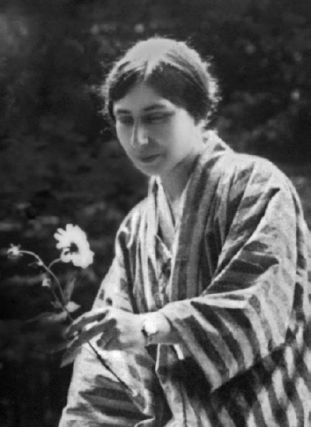 “Courage triumphs over obstacles and difficulties and opens the gates to victory.”
– Mother Mirra, Aurobindo Ashram
“Sire,” they replied, “we want to be ready so that the enemy does not take us by surprise.”
“You can be of no use to me, you nervous and excitable men,” he told them. “Go home, all of you.”
You will notice that the Rajah was not impressed by all this noise and waving of swords. He knew that true bravery needs no clamour and clash.
Note: The soldiers in their fear and nervousness made a great noise, so as to scare away their enemy. However they were not genuinely courageous, otherwise they would have prepared to take the enemy by stealth.
Second Story: In the following story, on the other hand, you will observe how calmly the people behaved and yet how brave they were in face of mortal peril at sea.
Towards the end of March 1910, a Scottish vessel was carrying passengers from Australia to the Cape of Good Hope. There was no trace of a cloud in the sky and the sea was calm and blue. Suddenly the ship struck a reef six miles off the west coast of Australia.
Immediately the whole crew was on the move, each man hurrying as whistles were blown. But this noise was not the result of confusion and panic. An order rang out: “Man the boats!” The passengers put on their life-belts. A blind man led by his servant walked across the deck.
Everyone made way for him. He was helpless and all wanted him to be the first to be saved. A short time later the ship had been evacuated, and soon it sank. On one of the life-boats a woman began to sing. And in spite of the sound of the waves which at times drowned her voice, the oarsmen could hear the refrain which put strength into their arms:
Pull for the shore, sailors,
Pull for the shore.
The shipwrecked people reached the shore at last and were taken in by some good fishing folk. Not one passenger had been lost. In this way four hundred and fifty people had saved themselves by their quiet courage.
So the next time we are in a difficult life situation, we must be brave and recall the true meaning of courage as outlined by Mother Mirra, which is, the ability to keep one’s wits about and to be calm and unperturbed in the face of the greatest dangers.
“Fear is slavery, work is liberty, courage is victory. Whosoever is courageous can give courage to others, just as the flame of one candle can light another.”
– Mother Mirra
Whosoever is Courageous Can Give Courage to Others
Long, long ago, when Brahmadatta ruled in Benares, one of his enemies, king of another land, trained an elephant to wage war on him.
War was declared. The splendid elephant bore the king his master up to the walls of Benares. From the top of the walls, the people of the besieged city hurled down boiling hot liquids and shot stones with their slings. At first the elephant retreated before this terrifying rain.
“There is a courage which can make you cross rivers and another that enables you to take the right path; but even more courage is needed to stay on the right path than to enter it.”
– Mother Mirra, Aurobindo Ashram
But the man who had trained him ran towards him crying: “O elephant, you are a hero! Act like a hero and pull the gates to the ground!”
Encouraged by these words, the great creature charged and burst through the gates, leading his king to victory. This is how courage triumphs over obstacles and difficulties and opens the gates to victory.
And see how an encouraging word can give help to man and animal alike.
A good Muslim book gives us an example of this in the story of Abu Said, the poet with a brave heart.
His friends, who had learnt that he lay sick with fever, came one day to ask for news of his health. His son received them at the door of the house, a smile on his lips, for the patient was feeling better.
They came in and sat down in the sick man’s room and were surprised to hear him chatting with his usual good humour. Then, as it was a hot day, he fell asleep, and so did all the others. Towards evening, they all awoke. Abu Said ordered refreshments to be served to his guests and incense to be lit so that the room might be filled with fragrance. Abu Said prayed for a while, then he rose and recited a little poem of his own composition:
Despair not in your grief, for a joyous hour will come and take it all away;
The burning simoon may blow, and yet change into a gentle breeze;
A dark cloud may rise, but it passes away and brings no flood;
A fire may kindle and yet be smothered, leaving chest and casket untouched;
Pain comes but also goes.
Therefore be patient when troubles come, for Time is the father of wonders;
And from the peace of God hope for many blessings to come.
They all returned to their homes delighted and strengthened by this beautiful poem of hope. And so it was that a sick man helped his friends in good health.
Whosoever is courageous can give courage to others, just as the flame of one candle can light another. Therefore learn to encourage others, and be courageous yourselves.
Credit:
This article is from the spiritualbee.com. It has been republished here with permission.
Image Credit : Pixabay.com